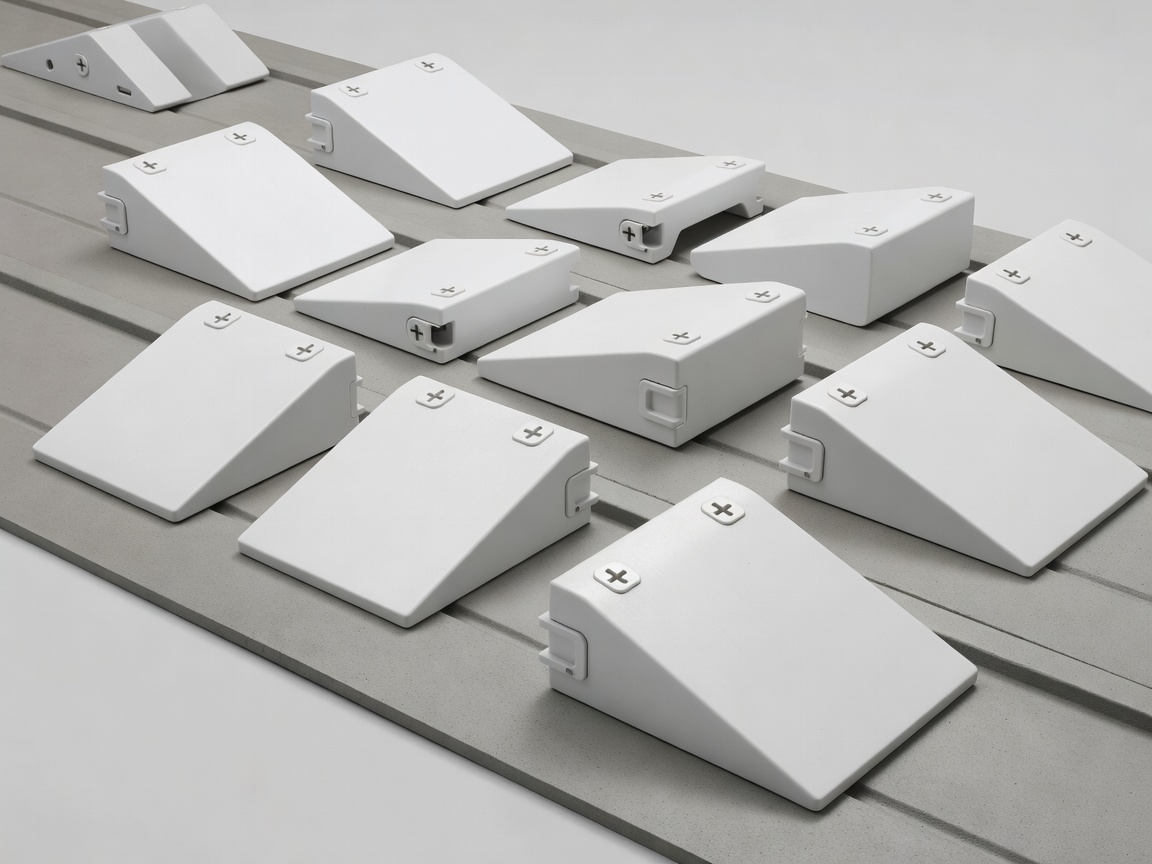
Specify the reason for adjustment
An adjustable obstacle should solve an identified training problem. Perhaps a reach needs alternative eddy positions, a different approach to a gate sequence or a way to renew technical challenges across a season. State that purpose before selecting a product or deciding how many movable elements the channel should contain.
Separate routine variations from major reconfiguration. A venue might have a small number of assessed layouts that operators can restore reliably, while more substantial changes require a dedicated review and commissioning period. That distinction protects session quality and prevents the word “modular” from implying unlimited freedom to rearrange the course.
Understand the hydraulic interaction
Obstacle size and position affect the water locally, but their consequences can extend upstream and downstream. A deflected jet can change an approach line; altered depth may affect another feature; a new recirculation zone can influence recovery space. Evaluate an arrangement as a reach, not as a collection of independent objects.
Gate placement is another layer of training variation, but it does not substitute for sound hydraulic design. A demanding gate sequence can sometimes make productive use of a familiar feature without moving heavy hardware. Coaches and operators should compare these options before committing time and resources to a physical change.
Design the attachment as part of the structure
Anchors, tracks, inserts and supporting concrete must be assessed as a connected load path by competent designers. Water loading, repeated use, vibration, wear, impact and environmental exposure can all matter. The visible module may be replaceable, but the interface embedded in the channel can become a long-term constraint.
Materials and surface transitions also need scrutiny. Compatibility, corrosion, ultraviolet exposure and damage mechanisms vary by product and setting. Manufacturer information should be reviewed in the actual project context; a component description is not evidence that every proposed configuration is suitable. Do not improvise fixing arrangements from an image or a generic diagram.
Make change physically practical
A technically movable element may still be difficult to move. Consider its mass, lifting provisions, storage location and the route between storage and the installation area. Channel isolation, plant access and equipment availability can determine whether a planned seasonal adjustment is realistic or repeatedly postponed.
These questions belong in design and procurement, not just in the eventual work method. The operating team needs appropriate manufacturer documentation, training and site-specific procedures developed by responsible specialists. Maintenance tasks should not depend on improvised access or on an assumption that the channel can always be emptied whenever convenient.
Keep a configuration record
Give each approved arrangement an identifiable record. It should link the installed components and positions to relevant water settings, restrictions and acceptance evidence. Photographs and drawings can help, but records need enough precision to distinguish configurations that look similar while behaving differently.
Track substitutions, repairs and departures from the recorded arrangement. A replacement that appears equivalent may have a different interface or influence the flow in an unexpected way. Clear change control allows the responsible team to determine whether the change is routine, requires further assessment or should not proceed.
Check before returning to training
Reconfiguration should end with an appropriate inspection and controlled verification process. The required evidence depends on the nature of the change and the project’s established procedures. Mechanical security, the condition of adjacent surfaces and the resulting hydraulic behaviour belong to different but connected parts of that review.
Do not use ordinary training activity as the first uncontrolled test of a new arrangement. The responsible project and operating teams should define how commissioning will be carried out and who can authorise return to use. If the observed result differs from the intended behaviour, pause and investigate rather than compensating through informal coaching instructions.
Judge adaptability over the whole life
The value of a modular system includes more than the number of possible layouts. Compare replacement-part availability, inspection demands, storage needs, downtime and the staff effort required for each change. A simpler system that is used well can serve a programme better than an elaborate system whose adjustment process is too burdensome.
Venues such as Kanupark Markkleeberg, Čunovo’s Divoká Voda complex and Wero Whitewater Park can prompt useful conversations about purpose-built whitewater settings. Their public appearance does not disclose every structural or operational decision. Use references to frame questions for designers and suppliers, not to reverse-engineer an unassessed installation.
Next / Venue operations